
Some general Naoshima travel advice
Stay for longer than you think — really.
It’s a little island, isn’t a day enough? It could be, but you will need to make some choices. It’s easy to underestimate the sheer volume of places to visit on Naoshima. More importantly, the truth is that you just can’t know everything before you get here. Don’t exhaust yourself trying to cram in the sights you thought you needed to see before you arrived, and don’t let yourself miss the many little hidden moments that make being on an island so delightful. Give yourself time to discover the unexpected, savor the bits that resonate with you, and take breaks. I recommend at least an entire day (staying two nights on the island or in a nearby port) to see most of the highlights on Naoshima. If you want to truly immerse yourself, or if you want to explore other islands besides Naoshima, then you should stay at least three nights.
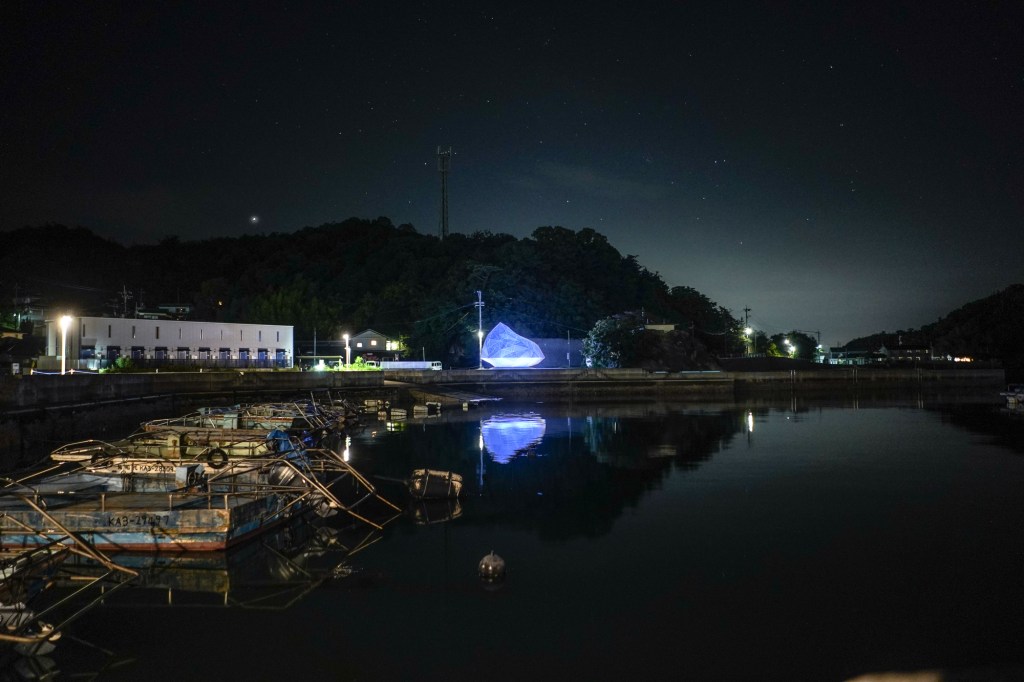
Don’t try to see everything — you’ll only end up disappointed.
Even if you’ve given yourself a few nights here, there will be something that is closed, or that you forgot to get to while you were in the area and now you’re on the wrong side of the island. You’ll mix up the online tickets and realize only after the museum is sold out for the day. The cherry blossoms will be in bloom the week after you depart. Or you’ll find that even three days isn’t enough to cover everything to your satisfaction. Don’t let it get to you. This place has been intentionally designed to frustrate your efforts to see everything in one visit. You will have a much more fulfilling experience if you don’t get hung up on seeing everything and just enjoy what you can comfortably get to. Stopping for coffee and skipping a museum is absolutely okay.
Don’t expect flexibility — bring it with you instead.
Service in Japan can be truly outstanding, and the country has grown even more visitor-friendly in recent years as the government has encouraged inbound tourism. That service culture will follow you out to the islands, at least somewhat. But in rural Japan there are often situations that would thwart even the most earnest efforts to assist you. It’s much more expedient to build in your own flexibility for situations where there may otherwise be none available. Bring a snack just in case. Pad your schedule just in case. Note how long it’ll take to walk even if you’re planning to take the bus. Hopefully you won’t end up needing to rely on any backup plans, but having a few ready will give you peace of mind and reduce friction with people who would love to help you but simply cannot.
More specific advice
Check the calendar, and book your museum tickets early.
Before making any plans, visit the Benesse Art Site Naoshima calendar and see what is open on the date(s) you’d like to come out. The calendar is viewable six months into the future — if you are making plans more than six months ahead of time, keep in mind that most museums are closed on Mondays, except on Japanese public holidays that fall on Mondays, in which case the museums are closed on the next day. (Teshima and Inujima museums are closed on Tuesdays but are similarly affected by national holidays.) Also, museums are closed for maintenance for long periods in the winter, so be especially careful when planning a January visit. Beware of busy travel times like Golden Week, Obon, and the new year, when lots of Japanese people are on the move and everything from hotels and restaurants to trains and taxis are much more difficult to book.
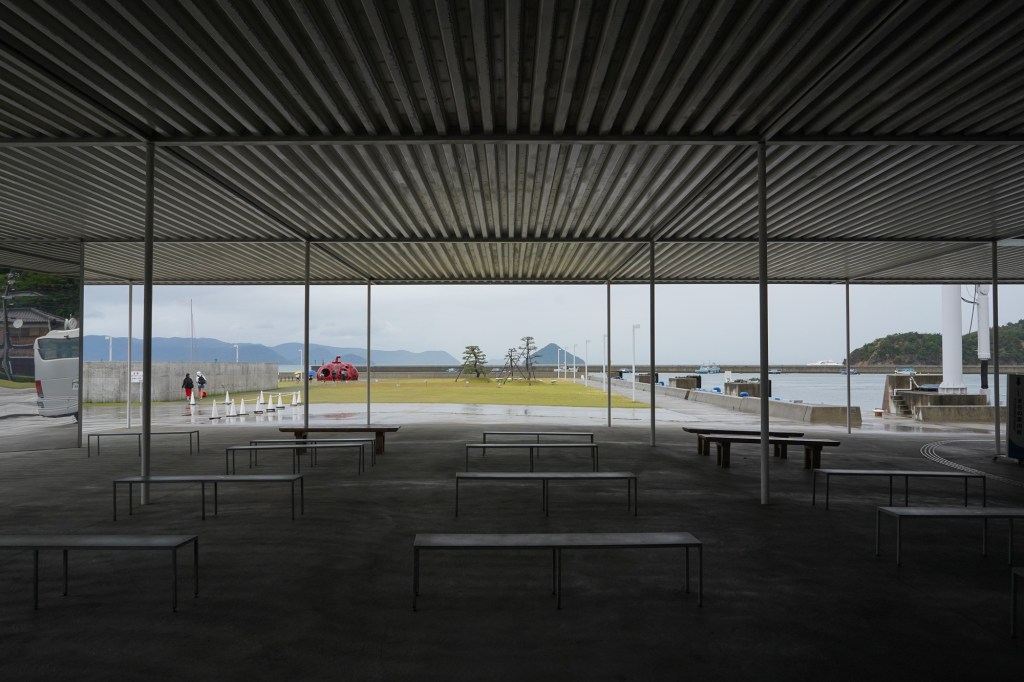
In 2024, Benesse Art Site Naoshima introduced online tickets for all museums. Some facilities require specific entry times (notably, crowd-favorites Art House Minamidera and Chichu Art Museum, as well as Teshima Art Museum), but for most you simply purchase your ticket for the day and visit any time. Here is a link to the tickets portal.
Make sure you are able to log in to your tickets account from your smartphone, and make sure to charge your smartphone! Also, take a screenshot of the “My QR Code,” which you can find at the top of your tickets page. That’s the code for your account, and museum staff who scan it will be able to see all of your tickets, freeing you from the hassle of keeping track of them. The only exception is Naoshima New Museum of Art — the automatic entry turnstyle requires you to scan the museum-specific ticket for each person in your party. Do not use the QR codes that are emailed to you, use the ones on the tickets portal.
For venues not associated with Benesse Art Site Naoshima, such as Memory of Lines and Usaginingen on Teshima, and all of the venues on Ogijima and Megijima, plan to pay cash (not card) at the time of entry.
Pick the right season.
Summer is a busy season on the islands, with lots to see and do. If you don’t mind the heat and the occasional crowd, it’s a fun time to explore the sights, swim at the beach, or just hang out by Yayoi Kusama’s Red Pumpkin and watch the sun set behind the Great Seto Bridge.
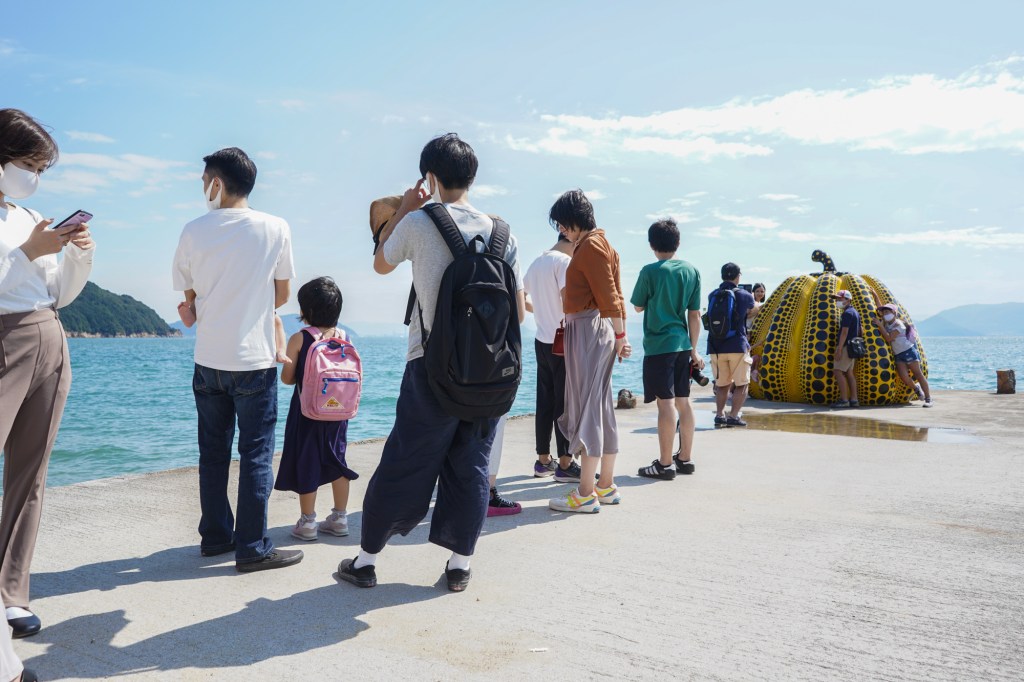
Spring and fall are the most crowded — for a reason. Spring and fall visitors should book accommodation as early as possible, as rooms regularly sell out. Spring is beautiful on the islands, particularly if you come when the cherry blossoms and mountain azaleas are blooming. Except for the national Golden Week holiday, it’s often less busy than the summer.
In the fall, when the weather cools, you might be lucky enough to catch the autumn festival on Naoshima, which occurs throughout October and features taiko-drumming boys carried around on wooden palanquins.
Unlike many of the other art islands, Naoshima’s museums are open year-round, except for a short maintenance period in the winter. This is also true for the main attractions on Teshima and Inujima, though maintenance periods vary by island. This means that winter can be a great time to check out popular sites like Chichu Art Museum; on weekdays you might even have the place virtually to yourself.
Wear appropriate clothing — particularly footwear.
Your experience on the island will be greatly improved if you dress for the occasion. Don’t test fate: take a 30% chance of rain as “it’s going to rain.” Foldable umbrellas and light wind- and rain-proof jackets are good to have on hand, particularly in the spring and fall. Even when the weather gets mild in the early spring, the wind can be chilly. The wind in the winter is especially frigid. Summer afternoons are getting more oppressive every year — pack a wide-brimmed hat, breathable clothes, and a water bottle. You can be fashionable again when you’re heading back to the city.
Now for footwear: Wear shoes that are easy to take off and put back on. You will be doing this a lot, as many of the art spaces as well as cafes and restaurants are no-shoes-allowed. There are not always benches available for donning and doffing shoes so if you’ve got a pair of cheap slip-ons (or loosely tied sneakers) you’ll be much less inconvenienced.
Bring cash.
There are a growing number of businesses on Naoshima that accept cashless payments, but it is still far from universal. Bring enough cash for a few meals per person at a minimum plus the odd cash-only e-bike, as well as a stash of ¥100 yen coins for the Naoshima bus, coin lockers, and other unexpected situations. There are foreigner-friendly ATMs at the post offices on Naoshima and Teshima as well as the 7-Elevens on Naoshima and near Uno and Takamatsu ports.
| ← Last | ↑ This | → Next |
| Other islands near Naoshima | Tips for savvy island explorers | Art island transportation |

